Showing posts with label Art Pyrography. Show all posts

Friday, December 14, 2018

Bored? Look at These Hobby Ideas

  Bored? Look at These Hobby Ideas! Have you ever played one too many computer game or watched one too many old rerun? You just can't get into another mystery and you just feel flat? Maybe you are suffering from boredom, that familiar accomaniment to our automated, precooked lifestyles. If so, you need to check out these hobby ideas. Hobbies have been found to be therapeutic as they relieve stress and get the mind active. In this article, you'll find hobby ideas for every sort of person, from the intellectual to the athlete, from the homemaker to the attorney. Many times we are bored because we have become too inactive. If this is your problem, you might like a sports hobby. Have you ever tried tennis? How about golf? Many people simply love bowling until it becomes an important part of their lives. Sports hobbies get you out of the house and often are a way to make friends with others. Then again, some active hobbies can be enjoyed in our own homes, such as weight lifting and doing aerobic dance to a video. Speaking of aerobic dance, dancing is another great pastime. When you think of hobby ideas, don't forget the many forms of dance. Square dancing is fun for people who like getting together with groups, while ballet and modern dance appeal to the more contemplative souls. And while we're on contemplation, you might enjoy doing yoga stretches as a hobby. Maybe we're feeling bored and listless because we've been cooped up in the house too long. If that's the problem, here are a few hobby ideas to get you out in the fresh air. Have you ever thought of taking up canoeing, hiking, or trapping? How about getting involved with an environmental group? In many states, you can form groups to clean riverbanks and monitor water quality, and the state will provide perks such as t-shirts, work gloves, and first-aid kits. Or maybe you'd like studying the flora and fauna of your region. It can be great fun to stroll through the woods and fields with a field guide, learning to identify each wildflower, insect, tree, and bird. There are almost as many hobby ideas as there are bored people in the world, because everyone puts their own spin on their favorite hobbies. Maybe you'd enjoy decorating your house with antiques, or learning to bake specialty breads from around the World. Maybe you'd like to take part in a little theatre production, or learn to play guitar. What about the fine arts of weaving tapestries or painting with oils? Candle making, soap making, and many other old-time crafts are being enjoyed again. Truly, with all these hobby ideas, there is no reason to stay bored for long!

   http://art-and-craft-hobbies.com/ 

http://art-and-craft-hobbies.com/shop/

 group Art Studio of Lewis Baber , Post and Sell your ART. https://www.etsy.com/shop/Magikaljourneys?ref=seller-platform-mcnavArt Two Old Guys Folk Art


Share this:http://Gallery-Wall-Art.com

http://wall-art-gallery.com facebook.com/groups/wallartgallerywallartgallery@groups.facebook.com Blog: of art and craft-hobbies Website Stores http://art-and-craft-hobbies.com/ http://art-and-craft-hobbies.com/shop/ group Art Studio of Lewis Baber , Post and Sell your ART. https://www.etsy.com/shop/Magikaljourneys?ref=seller-platform-mcnavArt Two Old Guys Folk Art Share this:http://Gallery-Wall-Art.com 
Monday, December 10, 2018

Start an Art Collectible Hobby and Beautify Your Home


Start an Art Collectible Hobby and Beautify Your Home Collecting is a fun hobby, and one of the most interesting things to collect are art collectibles. Many different items can be painted with artwork and become an art collectible. Hobby enthusiasts collect such things as saw blades, and wooden eggs which have had artwork painted on. People even collect designer rugs as art. Another art collectible hobby is collecting limited edition plates, thimbles, Christmas ornaments, and figurines produced by such companies as Bradford Exchange. And of course, many people collect fine art paintings. The person with an art collectible hobby will probably find his or her own favorite artists whose works they appreciate. They can choose to focus on one particular artist, either past or present, or they can choose from the works of many artists. On the other hand, they may collect art and art objects around a theme they enjoy, such as cigars, wild animals, or piano music. One may think of an art collector as a rich person who has the money to spend hundreds of thousands of dollars on an original Van Gogh. A person of more modest means can collect art too, however. Post cards are a good place to start. Most art museum gift shops offer high quality, glossy postcards printed with some of their more notable acquisitions. By buying those cards one really appreciates, anyone can have an art collection. Ebay is a good source of art collectibles whatever type of art or collectible you fancy. In fact, if you are just starting out, the choices and options can be overwhelming! Just remember that you can sell your own belongings as well as buying those of others. This should make the impact on the budget a little less powerful. Other ideas for inexpensively collecting art collectibles are scouring flea markets, thrift shops, and garage sales. You never know what treasure someone else may be getting rid of. One nice thing about art collectibles is that artists can be found in every part of the world. The art collector should scout the local art shows, museums, and artist's hangouts to find out just what sort of talent can be had less expensively and close to home. Because of the local flavor of some artwork, art collectibles make good travel souvenirs. For instance, the artist Linda Barnicott specializes in paintings of scenes, buildings, and landmarks found around Pittsburg, Pennsylvania. Similarly, collectors can find local artist almost everywhere. An art collectible hobby will keep you interested in life and give you a home filled with art masterpieces as well. If you enjoy pretty and interesting things around you, consider starting an art collectible hobby today.   Website Stores http://art-and-craft-hobbies.com/ http://art-and-craft-hobbies.com/shop/ group Art Studio of Lewis Baber , Post and Sell your ART. https://www.etsy.com/shop/Magikaljourneys?ref=seller-platform-mcnavArt Two Old Guys Folk Art   Share this: http://Gallery-Wall-Art.com
Friday, December 7, 2018

Buying Paintings: Gothic Art

Buying Paintings: Gothic Art
photograph of paintings Photo by Rene Asmussen on Pexels.com[/caption] Some of the most valuable early artwork comes from a point of time before the Renaissance had begun, and going on through the early Middle Ages, referred to as the period of Gothic art. During this particular time in history, the artwork took on telling narrative stories through pictures, and much of these pieces were Christian and secular in nature. Some of the earliest examples of Gothic art are sculptures found on cathedral and abbey walls, and the first real form of Gothic artwork began as architectural works in fact, even becoming the subject matter for many stained glass windows at the time. The style of painting that further defined Gothic art wasn’t produced until nearly fifty years after Gothic architecture and sculptures, and even though the break between Romanesque artwork and the Gothic styles has remained imprecise at best, the beginnings of Gothic artwork seems to occur in various areas at different but related intervals. The artwork began in England and France around 1200, and in other areas like Germany and Italy between 1220 and 1300. The paintings stayed just as narrative as the architecture on church walls during this time, and has stayed the territory of secular storytelling for a long time afterwards. Though Gothic art in paintings has had a relatively short time as the medium of choice amongst the artists, there is evidence that the artwork falls into four particular styles of these paintings, and these were the most common forms during this time period. The fresco, the panel painting, the illuminated manuscript, and the artwork done on stained glass are all depictions of Gothic painting. Of these particular types, stained glass artwork had remained a strong reminder of those ages long past, and is still created by master artisans that learned their trade skills from these dark ages. In the case of the other three particular forms of Gothic painting, frescoes continued to be used as the pictorial narratives on church walls in southern Europe, and were a consistent incorporation of early Christian and Romanesque traditions. In Italy, during the 13th century, the panel painting began and spread throughout Europe. With this proliferation, panel paintings became even more predominant by the 15th century, and becoming even more popular than stained glass at the time. Since not all monumental works have survived, illuminated manuscripts are the most complete record of Gothic painting, and provide a comprehensive account of styles that would otherwise perished. As the state of the world began to change, so too did the interpretations of the artwork as a reflection of these changing times and attitudes, and the movement became known as International Gothic by the late 15th century. From there, it had evolved into an art form depicting not just secular stories and allegories, but also resulted in the occurrence of more illuminated manuscripts and paintings as increased trade and the rise of cities and universities grew. With this proliferation of growth, more people were literate, and lead to better records kept with this occurring. Leading up to many of the well-known medieval artists today. The International Gothic style of artwork was developed in Burgundy, Bohemia, and northern Italy in the late 13th and early 14th centuries. During this period in Gothic art, artists traveled widely around the civilized world at the time creating a common aesthetic among the aristocracy of the time, and removing the concepts of contrary artistic styles. The main influences for this period in artwork were derived from northern France, the Netherlands, and Italy. It was during this time, that aspects of rational uses of perspective and setting became a common feature, and other features included flowing lines and rich coloring. In the case of Gothic sculpture, it had evolved from the elongated forms of the Romanesque style, and became a more naturalistic expression in the early 12th and late 13th centuries. Influences from Greek and Roman statuary were incorporated into drapery, facial expressions, and poses. The sculptor Claus Sluter and the changing tastes for more naturalistic styles became a harbinger for the end of the Gothic period of art, and signaled the beginning of the evolution into Renaissance period at the end of the 15th century. [gallery ids="162,168" type="rectangular"] In a time period where upheaval was the normal occurrence of many of the people then, Gothic art fell into the broad scope of medieval artwork that included such disparate elements and styles as Viking art and Celtic art, but in varying degrees relied upon the artistic heritage of the Roman Empire and the early Christian Church. In fact, much medieval artwork has the history of these elements conjoining and converging into the remarkable artistic legacy we read about today, and have contributed over time to the outcome of many other forms of art  Renaissance


 Website Stores http://art-and-craft-hobbies.com/ http://art-and-craft-hobbies.com/shop/ group Art Studio of Lewis Baber , Post and Sell your ART. https://www.etsy.com/shop/Magikaljourneys?ref=seller-platform-mcnavArt Two Old Guys Folk Art   Share this: http://Gallery-Wall-Art.com    

How to Craft Basket Flowers

 flowers colorful plants bloom Photo by Pixabay on Pexels.com[/caption]

How to Craft Basket Flowers We have walked through the steps of creating the May basket, now it is time to craft your flowers. We have added handles, basket, etc, to your quilt, which at this time you should have created six blocks to make your basket. How to create flowers: We are quilting flowers. On the left side of your fabric, you will have invented pink squares. You can trace your pattern to start your project. Trace at least one flower (Choice), use your outside solid lines, and repeat your steps to create the foliage, or leaves. Use the variety of green patterns and use the yellow narrow pieces to create the center of your flower. You can design roses if you like. Use a variety of greens, red, pink, white, etc, if you intend to create roses and petals. Along the lines, you have marked, cut the fabric strips sewn onto your fabric, the shaped patterns that form your design, cutting only near the lines. Use freezer paper and turn it over so that you reveal the side that does not have a shine. You want to create a starting line for the six centers of your flowers, and the flowers also. Once you mark the 12 parts, mark the leaves (12), marking them inside the dash lines. Now you are ready to cut your shapes. You will need an iron and board. Use your hot press, or iron to press the flowers on your paper, pressing in the middle of your flowers on the left side and in the middle. You want the glossy paper turned in the direction of your fabric flower at this point. Do the same with the center of the flowers and foliage. Next, collect your yellow filament/thread and tone it with the center of your flower. If the colors do not match, try another shade of yellow. Run lines of stitches into your cloth, which encloses the ring of the freezer paper. You want to congregate your material around this ring, so pull your filament up at the end. Now, tie your thread, press the ring, and use your starch bottle, spraying the region. Do the same for the center of your flowers. Next, use your variety of green filaments that match your leaves and collect the allowances at the seam. (1/4 inch) Collect around the foliage and streamlines of stitches along your fabric, about the enclosed region of your ring that is designed on the freezer paper. You want to collect your textile about the ring. Pull your filament/thread up at the finish and tie it, pressing the ring. Again, spray with starch. When you congregate your allowances at the flower seams, snip the inner points of the flower corolla/petals where the flower collectively forms a ring. You will need to collect your thread that matches the color of your petals, such as pink. Just as you collected the edges of your leaves, do the same for your corollas. Once you finish running stitch lines in your fabric, which you have enclosed freezer paper about the ring, you will need to gather your material about the ring. Next, pull your strands of thread up at the finish. Next, bind your filament and then press the ring. Press, and spray the region with fabric starch. Now seam your allowances, i.e. snip the central points of the leaves, flower center, etc where the flower collectively forms a ring. Press and starch to complete your crafting task:   [gallery ids="137,133" type="rectangular"] Now you are ready to assemble the top of your quilt. After you assemble, you can move to finish your craft. Website Stores http://art-and-craft-hobbies.com/ http://art-and-craft-hobbies.com/shop/ group Art Studio of Lewis Baber , Post and Sell your ART. https://www.etsy.com/shop/Magikaljourneys?ref=seller-platform-mcnavArt Two Old Guys Folk Art   Share this: http://Gallery-Wall-Art.com  

Tuesday, December 4, 2018

Abstract Art As Therapy


Abstract Art As Therapy
Summary:
Abstract art is not just a mixture of colourful meaningless patterns and arbitrary shapes.
There is, I believe, a definate therapeutic value to be found in most of the enigmatic marks made by the very different styles available today. What appears to be the most important decision to make is a very careful consideration of the specific audience in conjunction with the choosing of the appropriate artwork. This is not something to be taken lightly or quickly. This can cover ...
Article Body:
Abstract art is not just a mixture of colourful meaningless patterns and arbitrary shapes.
There is, I believe, a definate therapeutic value to be found in most of the enigmatic marks made by the very different styles available today. What appears to be the most important decision to make is a very careful consideration of the specific audience in conjunction with the choosing of the appropriate artwork. This is not something to be taken lightly or quickly. This can cover anybody within the wide spectrum of individual audiences: a busy boardroom environment or a single office or room where quick thinking, fast reactions, and serious decision making is required; or a worker who returns from a hard days work simply wanting to be visually massaged by an easily observed enigma; or even the space inwhich the desperate and mostly misunderstood person who is gradually loosing their tentative hold on the sense of reality. There is a tremendous variety of possibilities.
Here are some suggested associations from one artists point of view:
Colour plays an obvious healing and therapeutic role to be found in a carefully selected crafted piece, and so colour-field work, which is growing in popularity, first conceived by artists like Mark Rothko and Ellsworth Kelly with their vast areas of empty colour space, might add a general feeling of peace and quiet to an otherwise noisy and hectic environment. With there being very few variations within such a large image a gentle sense of immersion into abstract stillness can slow down any fretful or irratic thinking, and even assist with the adrenal challenge of a creative.
Indefinate shapes or patterns by the likes of Jackson Pollock, Peter Lanyon, and Howard Hodgkin (again, similar works inspired by these very different abstract styles can be seen in many exhibitions, shops and galleries), show a very positive association, and may perhaps persuade a mind filled with illogical thoughts to pause, simply take in the apparent spontenaiety, and then take a different direction. Hodgkin style works in particular can be seen as puzzle like canvases inwhich the observer has no real point of reference so is free to "start" anywhere upon the picture. And because there are very few defined areas sometimes the observer inevitably finds themself either regarding the piece with little emotion, and therefore can freely make a comment - positive or not.
Let us not deny, however, the fact that many an image that has the potential to provoke a negative response can also be of great value to the observer who might actually benefit from seeing such a challenging picture that bears such a bad association. Better there on the wall than here inside the head. In this case the classic associations of red for blood and danger, black for death and sin, brown for decay and illness, along with dramatic lines and movements found in a painting are equally valuable stimulii if revealed within the appropriate environment. This comes back to my point made at the beginning - when choosing a picture, very careful consideration must be taken in order to find that one work of art which speaks directly to the very deepest parts of the observer.
Website Stores

http://art-and-craft-hobbies.com/

http://art-and-craft-hobbies.com/shop/

group Art Studio of Lewis Baber , Post and Sell your ART.
https://www.etsy.com/shop/Magikaljourneys?ref=seller-platform-mcnavArt
Two Old Guys Folk Art
Share this: http://Gallery-Wall-Art.com

http://Gallery-Wall-Art.com

Monday, December 3, 2018

Don’t Avert Your Eyes


Don’t Avert Your Eyes
There are some fine artworks that can be described in no other terms then that they are “difficult”. They may deal with harsh themes of fear, pain, loneliness or themes of violence such as war or suicide. When we encounter these kinds of art works in shows or galleries, it is our natural instinct to avert our eyes or just avoid that part of the show because we know it will upset us.
But we need to know how to look at difficult fine art as much as we can look at art that pleases us. The artistic soul does not confine itself to just themes of happiness and peace. There is something about the artistic temperament that can produce some of the most beautiful art works from the torture in the soul over personal tragedy or social wrongs.
Never has this been more evident than the explosion of art that came out of the great wars of the last century. It seems that after each great conflict, artists came forward with stirring and moving art works that reflect the horror in the human heart and soul that is a result of these terrible events in human history.
Sol this is one good reason to patronize and appreciate what the artist is trying to say to us. By expressing those strong emotions in the form of art, the artist is performing an act of emotional purging personally. But because the place of artist in society is sometimes to bring healing, that catharsis of the soul the artist goes through can perform a similar catharsis for you and I when we are strong enough to expose ourselves to that art work.
It is also important to remember that the artist is not necessarily trying to upset you and not to allow others to interpret the artist for you. Not long ago the photographic artist Robert Mapplethorp created a huge controversy with a show that included some very graphic sexual images. Along with those images were some lovely photographs of flowers, fruit and children. But because the artist has offended the sensibilities of some, many interpreted his other art works, particularly those of the children as obscene.
Look at each artwork in its own context. It is possible that Mapplethorp was just making a commentary on the beauty and innocence of young children. But because the children were nude and because Mapplethorp was gay and had produced other very provocative sexually charged pieces, the viewers projected perverted sexuality onto those pictures of children. The lesson to us is that we cannot let other circumstances to influence how we react to art. Each artwork stands on its own. We, as educated consumers, must judge each work in its own setting to see what the artist may have been saying with that particular work.

There may be astounding beauty even in scenes of tremendous suffering and human tragedy. So when you look at a difficult piece, in addition to letting the theme and the pathos of the piece talk to you, be sure you judge the artwork artistically as well. Study the colors, the relationship of the objects to each other, the use of realism, surrealism and abstract art concepts to add depth to what you are looking at. Always let the artwork be an artwork. Then you will enjoy multiple meanings and layers of cognizance to what the artist has presented.
Website Stores

http://art-and-craft-hobbies.com/
http://art-and-craft-hobbies.com/shop/

group Art Studio of Lewis Baber , Post and Sell your ART.
https://www.etsy.com/shop/Magikaljourneys?ref=seller-platform-mcnavArt
Two Old Guys Folk Art

Share this: http://Gallery-Wall-Art.com
Website Stores

Sunday, December 2, 2018

Art Gallery

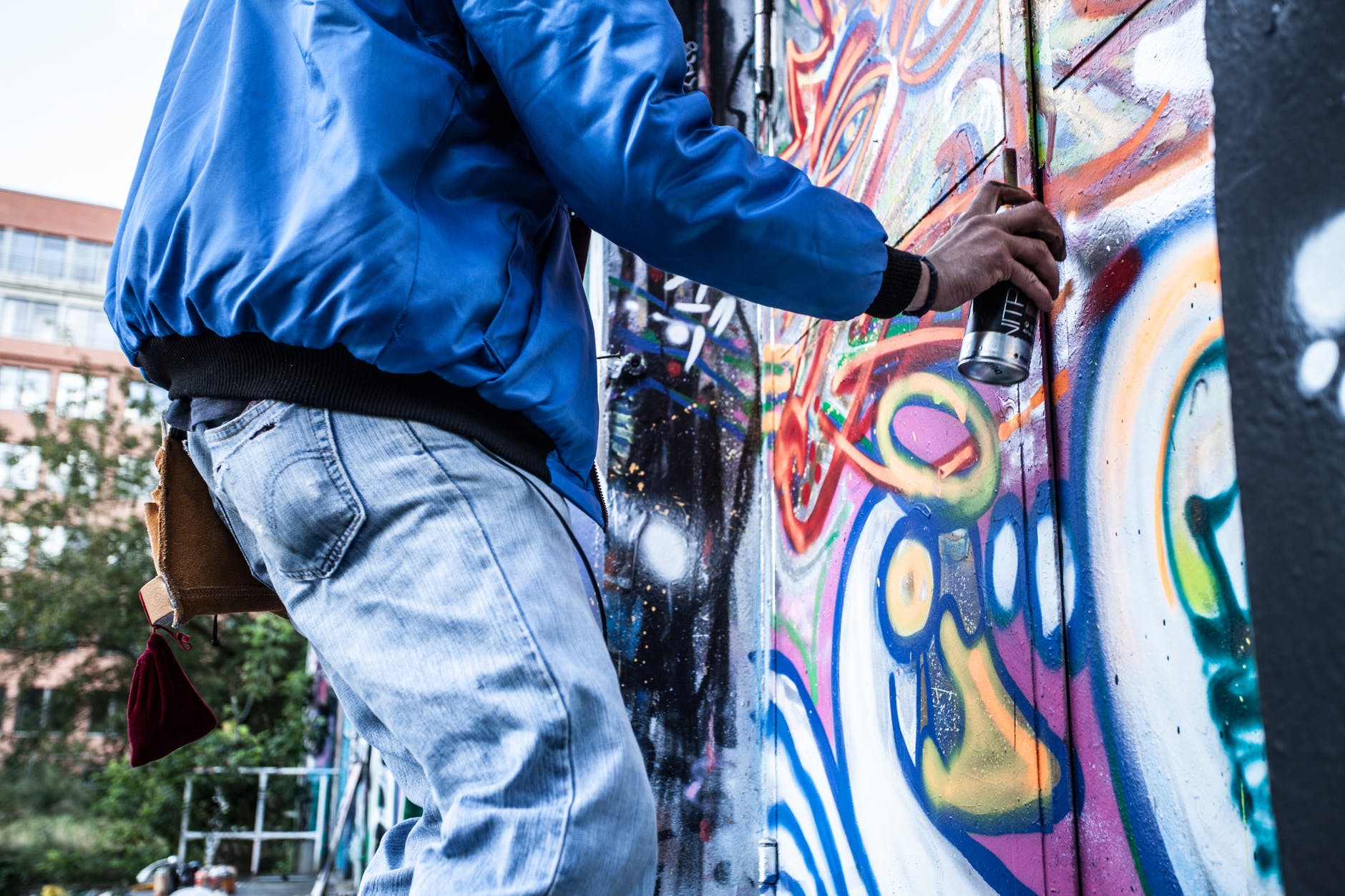
 photo of person painting graffiti Photo by Wendelin Jacober on Pexels.com[/caption]
Summary:
Visiting an art gallery is an educational and worthwhile venture. Why not take the time and visit your local art gallery with a friend or take the whole family.
Keywords:
Art gallery, art centers, art, online art gallery
Article Body:
Art Galleries are generally known for art that highlights the natural beauty all around the world. Everyday there are people creating entirely new works of art, and placing them in art galleries all over the world.
The type of art included in a gallery can vary. Art can encompass a wide variety of medium, such as, drawings, paintings, photography, and sculpture, to name a few. The purpose of the art gallery is to show off the work of local and national artists in a way that people will want to purchase them. Many of the artist’s works can also be bought as prints. This allows the artist to sell more, while making the price more affordable to people.
Local Art Galleries
Most major cities have wonderful art galleries. If you have never visited an art gallery, you should make a point to do so. You may think that an art gallery is not where you would want to spend the afternoon, but you may be surprised at how interesting an art gallery can be. Check your local phone book for an art gallery near you.
Virtual Art Galleries
If you have Internet access, then you can find an online art gallery, my choice as well. If you can view and possibly order from the comfort of your own home why not. Virtual tours of art galleries are a lot of fun.
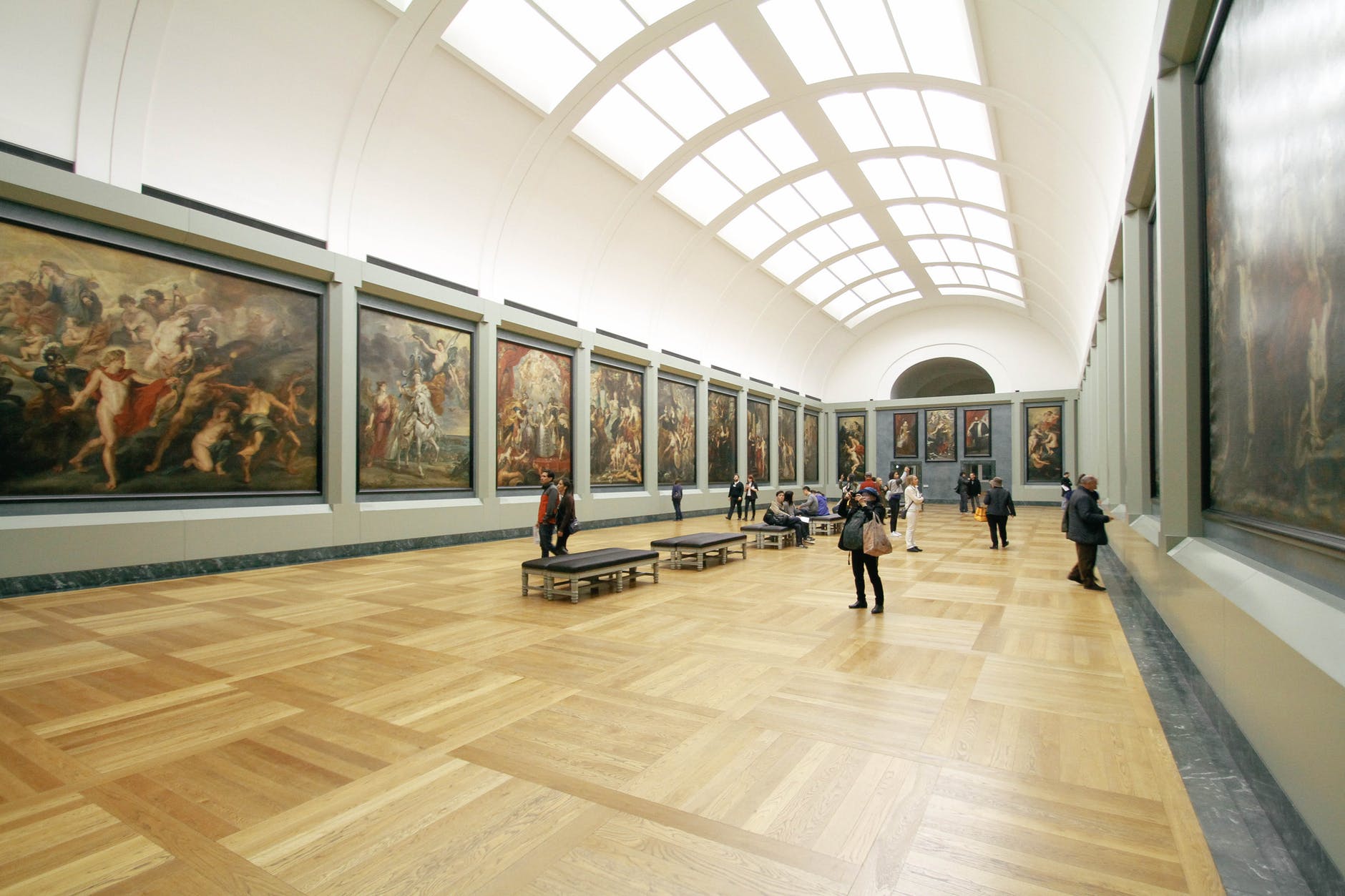
[caption id="attachment_107" align="alignnone" width="636"]exhibit painting display Photo by Riccardo Bresciani on Pexels.com[/caption]

As with walk in art galleries, virtual art galleries are also worldwide. Listed below are a few galleries that you can visit online.
o Art Vitam, Miami, Florida
o Art of this Century, Paris, France
o Art Space/Virginia Miller Galleries, Coral Gables, Florida
o Artco Galleria de Arte, Lima, Peru
o Casa d’Arte San Lorenzo, Pisa, Italy
o Diana Lowenstein Fine Arts, Miami, Florida
o Espace D'Art Yvonamor Palix, Paris, France
o Galleria El Museo, Bogotá, Colombia
o Galleria Habana, Mexico D.F., Mexico
o Galleria de Arte Isabel Aninat, Santiago, Chile
http://Gallery-Wall-Art.com   22
Take the time to experience wonderful works of art at your local art gallery or on the internet. Even if you are not an art enthusiast, the works of fine artists all over the world will impress you.
Website Stores
http://art-and-craft-hobbies.com/
http://art-and-craft-hobbies.com/shop/
group Art Studio of Lewis Baber , Post and Sell your ART.
https://www.etsy.com/shop/Magikaljourneys?ref=seller-platform-mcnavArt 
Two Old Guys Folk Art
Share this:     http://Gallery-Wall-Art.com

Friday, November 30, 2018

Buying Paintings: Symbolism

Buying Paintings: Symbolism
Evoking a taste similar to the Romanticist tradition, but utilized mysticism and sensitivity through mythology and dream imagery, preceding the psychoanalytical work of Freud and Jung. With a strong philosophical touch, more so than a style of art, and Art Nouveau and Expressionist artists such as Edvard Munch. Beginning in France as a reaction to the movements of Naturalism and Realism, which seemed to capture the particular components of consensual reality, and presented spirituality and imagination reflecting some artists budding interest in religion and spirituality.
In literature, poet Charles Baudelaire was developing his work and the movement, and especially with such luminaries as Verlaine contributing to the collective effort of the literary movement during the 1860s and through to the 1870s. With the works of Edgar Allen Poe coming to popularity in the 1880s, the Symbolism movement in artwork represented an outgrowth into the darker and more gothic nature of Romanticism, and contrasted with Romanticism’s rebellious and impetuous sides. Symbolist writers wrote in very metaphoric and suggestive manner, to imbue the subjects with a sense of symbolic meaning, and made realistic images into representatives for more esoteric and primordial ideas.
In translating the language of dreams into artwork with symbolic leanings, discovering a visual style that draws upon that philosophical approach that captures a sense of art that has been influential on more than one movement artistically, and has evoked some of the more fantastic imagery to ever cross a canvas. The Symbolist Manifesto was published in 1886, leading to a description of the movement that included ideas such as being hostile towards plain and matter-of-fact meanings, and to express the ideal in a perceptible form was the sole purpose of this art form.
Symbolists that preferred poetic means of conveying their ideas, were known for their techniques of removing technical aspects to achieve a greater fluidity for their work, and became related with seeking use of symbolic images over raw description to evoke the state of the poet’s soul. Paul Verlaine was influential in an 1884 publication defining the essence of Symbolism, through many essays on the relevant poets of the day, and came to the conclusion of relating the works of this movement to the famed philosopher Arthur Schopenhauer, whose own work delved into art as a means of refuge from the strife of the world.
These similarities, which presented a contemplative and artistic refuge using themes such as mortality and otherworldliness, created disparaging arguments between critic and artist alike. Leading to many Symbolist poets of the day to make their own publications and periodicals, and the literary Symbolism then reached its’ peak in the year 1886, with one particular periodical lasting until 1965. Though the two aspects of the movement were distinct, they would occasionally overlap each other, and became a continuation for mystical tendencies in a Romantic tradition, even flirting with the self-consciously dark Decadence movement.
There were several dissimilar groups of painters and visual artists within the Symbolism movement, and the artistic movement seemed to have a greater impact worldwide than the literary movement, reaching multiple artists and sculptors from such distinct parts as Russia. Many of the symbols found herein are not necessarily universal, but more personally affected with the artist’s obscure and private references, with some dreamlike subject matter influencing later Surrealists. Symbolism has had a strong link to music for a while, and mostly due to the enthusiasm for the work of Richard Wagner, whose own music reflected his influence from the philosopher Schopenhauer.
Symbolism even grew to affect some of the literary fiction contributed by Oscar Wilde and Paul Adam, and has a pronounced ring when speaking about movements that have literarily and artistically that have crossed over into other inner groupings of artistic work. The waters of Symbolism have even filtered down the centuries into the state of motion pictures today, and early on held influence with Russian playwright Anton Chekhov, as well as Russian actor and director Vsevolov Meyerhold’s method of acting that influenced early motion pictures.
It is difficult to overlook Symbolism’s influence and repercussions throughout the timeline to the current period of the world, as it drifts through many aspects taken for granted on a daily basis, and many pieces of work for many artists from writer T. S. Eliot to painter Pablo Picasso and even the state of horror films as well. A decidedly different state of the world now has interpreted and reinterpreted all this throughout these hundreds of years, and created more and more material reflections of the state of things as they happen to be.
Website Stores
1
2
Two Old Guys Folk Art
Share this:      
LOOGOSSS

Wednesday, November 28, 2018

Buying Paintings: Romanticism


Buying Paintings: Romanticism
Though sometimes referred to as the “anti-classical” movement in art, Romanticism is a style that focuses on the artist’s individualistic and emotionally wrought point of view, and is found to oppose the art movement known as Neoclassicism. Even though there have been many artists to combine elements of both. Some of the more renowned names around this movement, which utilized strong emotion to convey meaning, were Francisco de Goya and William Blake respectively. This particular art form became a reaction to the outgrowth of reason by homing in on imagination and feeling.
It is not difficult to see the value in the paintings by these artists, and there have been many examples of how other artists have influenced one another over time. As the whole category of Romanticism refers more to the trends of artists, poets, and philosophers of the late 18th and early 19th centuries than as much to an artistic movement. Though one has definitely influenced the other and vice versa rather equally as time went along, there are very few areas in modern life that can be said to stay untouched by the Romantic period, and many agree that this was a vital point in the world’s development as a whole.
Where the people of the period at the time were involved in an overwhelming interest in things of a rational or enlightened nature, the Romantic ideal favored intuition instead, and has been the subject of many differing characterizations of the movement for intellectual and literary histories. There are many varying attitudes on how Romanticism has affected the modern world, and what place this movement has had in the greater picture of history. Some cite Romanticism as being the originating moment of modernity, while others seem to think that it is a beginning to a resistance to the enlightened age, and still others date the movement as a direct aftermath of the French Revolution that is completely continuous with the present.
Romanticism was previously mentioned as affecting music and literature as well as art, but this is less understated than it might seem at first, Romanticism is very prominent in the music and literature of this period. As the age moved along, more than a few critics have considered composers such as Mozart, Hadyn, and Beethoven as being the three Romantic composers. In literature all over the world, the Romanticism movement deeply affected every writer from Johann Wolfgang von Goethe through to even the 20th century’s Ayn Rand, and many more writers between those times when Romanticism was most prominent.
As it became apparent that Romanticism was going to stay a strong influence for many years to come, many critics have taken to confirming that the Romantic period has been elemental in the progress of art to the present day, and that there is almost no famed artist who has not been in part affected by these potent periods of artwork and creative purpose. This rebellion against social and political standards of the age was instrumental in the changing over from those same standards, and created a lush place from which to draw inspiration for the next centuries to come.
Romanticism has become a piece of history that cannot be overlooked for very long as every place that one can turn has somehow been affected by the progress from this one particular time period, though that is certain for many artistic movements that have been present throughout time, and seems to put more clout into the common statement of art imitating life and life imitating art. Neo-Romanticism worked itself out through artists’ reevaluation of the earlier works by those like William Blake, and especially in areas like Britain, creating a new underground of writers, artists, and composers.
Neo-Romanticists have been considered the contrast to naturalism as Romanticism was considered the opposite to Neoclassicism in its’ heyday because of the movement seems to stress feeling and internal observation, as opposed to the naturalistic tendency to stress external observation, and utilize historic rural landscapes to react to the modern world of machines and its’ urbanization. Post-romanticism is an outgrowth of passionate art that refers to a postmodern re-enactment of romantic themes and motifs in contemporary art up to today, and combines the best of traditional artwork with a more modern flair.

In regards to the 20th century turns that Romanticism has made, Romantic realism has evolved out of Romanticism to incorporate elements of themes of value while referring to objective reality and the importance of technique, and was popularized though not coined by the writer and philosopher Ayn Rand. This lead to artists incorporating Romanticism and Realism, though they seemed more weighed to the Romanticist side of the equation, and is considered more as a branching of the Romanticism movement today.
Website Stores

http://art-and-craft-hobbies.com/

http://art-and-craft-hobbies.com/shop/
group Art Studio of Lewis Baber, Post and Sell your ART.
https://www.etsy.com/shop/Magikaljourneys?ref=seller-platform-mcnavArt
Two Old Guys Folk Art

Share this:
http://wall-art-gallery.com